Most Influential Jazz Quartets: A Deep Dive Into Their Legacy

The jazz quartet format has produced some of the most innovative and enduring music in jazz history. These small ensembles, typically featuring four masterful musicians working in perfect harmony, have repeatedly pushed the boundaries of what’s possible in jazz. In this comprehensive exploration of the most influential jazz quartets, we’ll delve deep into the groundbreaking groups that not only defined their eras but continue to shape jazz music today.
The Dave Brubeck Quartet (1951-1967)
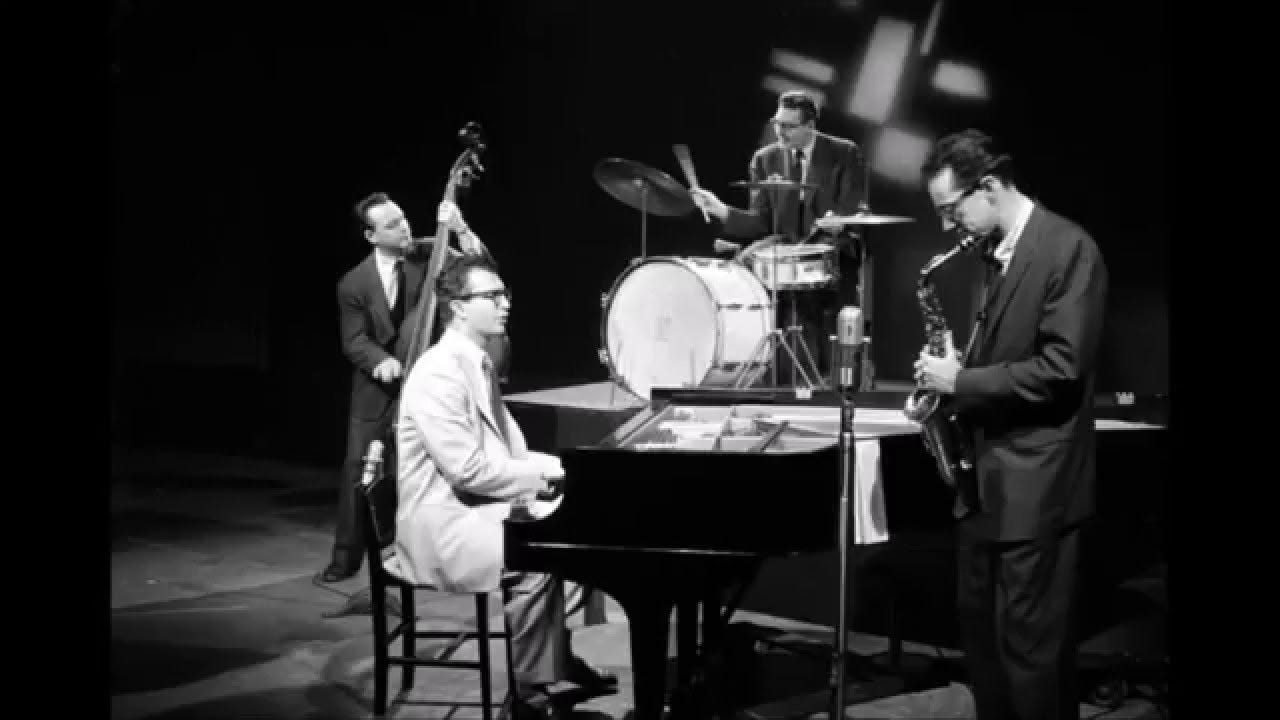
The Dave Brubeck Quartet stands as one of the most influential jazz quartets in history, revolutionizing the genre through their fearless experimentation with complex time signatures and polyrhythms. At the heart of their classic lineup was Dave Brubeck himself, a visionary pianist whose classical training informed his unique approach to jazz. Alongside him, Paul Desmond’s alto saxophone brought what critics famously dubbed a “dry martini” tone, creating lyrical lines that floated above the rhythm section. The steady backbone of the group was bassist Eugene Wright, who anchored the group’s rhythmic experiments with unwavering precision. Completing the quartet was drummer Joe Morello, a technical master whose facility with unusual time signatures enabled the group’s most innovative work.
This quartet achieved what many thought impossible: they made experimental jazz accessible to mainstream audiences. Their 1959 album “Time Out” became a landmark achievement, becoming the first jazz album to sell over a million copies. The album’s success wasn’t just commercial – it represented a paradigm shift in how jazz musicians approached rhythm and time.
Revolutionary Recordings and Musical Innovation
The Brubeck Quartet’s discography reveals their evolution and growing mastery of complex musical concepts. Their masterpiece “Time Out” (1959) broke new ground with every track, exploring different unusual time signatures while remaining remarkably accessible. The iconic “Take Five” in 5/4 time became more than just a hit – it demonstrated that complex rhythms could connect with mainstream audiences. “Blue Rondo à la Turk” went even further, introducing Turkish folk rhythms to jazz in a way that felt both authentic and innovative.
Following this success, “Time Further Out” (1961) pushed their rhythmic experiments even further. Each track progressively added beats to the bar, yet the music remained engaging and accessible. The album included the memorable “It’s a Raggy Waltz,” which showed how the quartet could make even the most complex concepts swing effortlessly.
Their earlier recording “Jazz Goes to College” (1954) captured the electricity of their live performances, showcasing their ability to connect with younger audiences while demonstrating their improvisational prowess. Later, “Jazz Impressions of Japan” (1964) revealed their skill at incorporating Asian musical elements, showing how they could absorb and transform diverse influences while maintaining their distinctive sound.
The Oscar Peterson Quartet (Various Lineups)
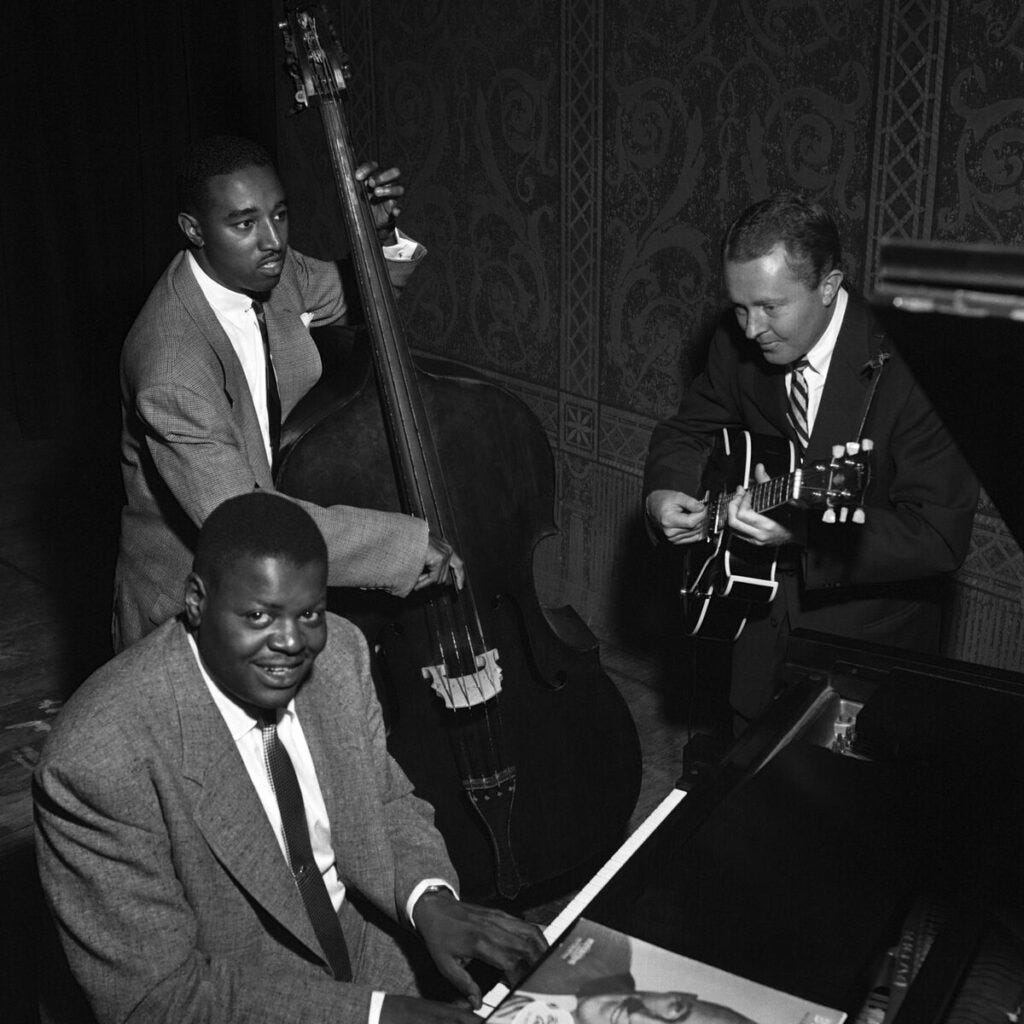
Among the most influential jazz quartets of all time, the Oscar Peterson Quartet set new standards for technical excellence and swing. The most celebrated lineup, active from 1953 to 1958, centered around Peterson’s virtuosic piano playing, which remained unmatched in its technical facility and musical imagination. Herb Ellis’s guitar work brought unique textures and harmonic sophistication, while Ray Brown’s bass playing helped define the role of the modern jazz bassist. Ed Thigpen’s drumming, particularly his masterful brushwork, provided sensitive accompaniment that could both drive the group and support its quietest moments.
Musical Legacy and Technical Excellence
Peterson’s quartet redefined what was possible in small group jazz. Their ensemble precision set new standards for group interaction, while their harmonic sophistication pushed the boundaries of traditional jazz vocabulary. The group’s rhythmic drive was relentless, yet they maintained an extraordinary dynamic range that could take listeners from whisper-quiet ballads to full-throttle swing.
Their recording of “Night Train” (1963) perfectly showcases their mastery of the form. The album demonstrates their ability to swing at any tempo, featuring Peterson’s virtuosic runs and Brown’s walking bass lines within the context of tight, sophisticated arrangements. Earlier recordings like “The Oscar Peterson Quartet #1” (1955) established their group sound and demonstrated their collective virtuosity, while “A Jazz Odyssey” (1956) showed their ability to tackle extended compositions with both technical brilliance and emotional depth.
The Modern Jazz Quartet (1952-1974)
The Modern Jazz Quartet (MJQ) stands as one of the most influential jazz quartets in terms of elevating jazz’s cultural status. The group’s remarkable synergy emerged from the complementary talents of its members: John Lewis, the musical director and pianist, brought classical refinement and sophisticated arrangements to the group; Milt Jackson’s vibraphone added warmth and swing to their chamber jazz sound; Percy Heath’s bass work provided a sophisticated harmonic foundation while maintaining a strong rhythmic pulse; and Connie Kay’s subtle, tasteful percussion work demonstrated how drums could be both assertive and elegant in a chamber setting.
Cultural Impact and Musical Sophistication
The MJQ revolutionized not just how jazz sounded, but how it was presented and perceived. Breaking from the traditional jazz club scene, they chose to perform primarily in concert halls, wearing formal attire that matched their sophisticated approach to the music. This wasn’t mere window dressing – it was a conscious effort to demonstrate that jazz deserved the same respect and attention as classical music. Their approach emphasized composed structures while maintaining the spontaneity of improvisation, creating a perfect balance between written and improvised music.
Landmark Recordings and Innovation
The group’s 1956 recording “Django” stands as a masterpiece of their early period. The title track, a moving tribute to Django Reinhardt, demonstrated their unique ability to balance composition and improvisation. Lewis’s sophisticated arranging created a framework that allowed each member to shine while maintaining the group’s characteristic elegance. The album showcased their ability to take a simple melody and develop it with the complexity of a classical chamber piece while never losing the essential swing that marked their jazz roots.
Their other 1956 release, “Fontessa,” pushed their artistic boundaries even further. The album explored extended composition forms rarely attempted in jazz at that time, with the title track unfurling like a baroque suite filtered through a jazz sensibility. The recording perfectly captured their chamber music approach, with each instrument’s voice clearly defined yet perfectly integrated into the whole. Their unique ensemble sound, characterized by the subtle interplay between Jackson’s vibraphone and Lewis’s piano, created textures previously unheard in jazz.
The John Coltrane Quartet (1960-1965)
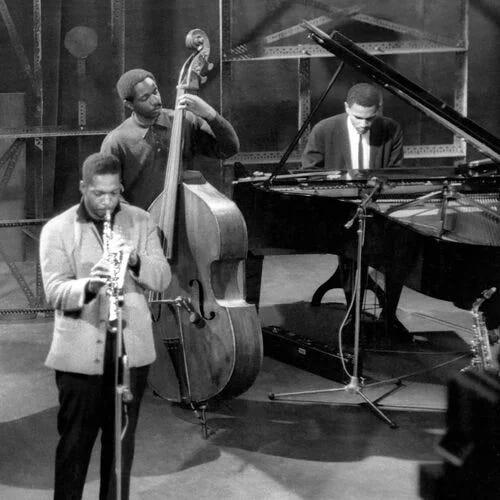
The John Coltrane Quartet represents perhaps the most spiritually and musically ambitious of the most influential jazz quartets. At its core was Coltrane himself, whose saxophone playing embodied both technical revolution and spiritual quest. McCoy Tyner’s piano work introduced quartal harmony to jazz piano, creating a new harmonic landscape that would influence generations of musicians. Jimmy Garrison’s bass playing provided both the freedom for exploration and the foundation that kept the music grounded, while Elvin Jones revolutionized jazz drumming with his polyrhythmic approach, creating a swirling, multi-layered rhythmic foundation that perfectly complemented Coltrane’s searching improvisations.
Spiritual and Musical Innovation
The quartet pushed jazz into entirely new territories, developing what became known as the “sheets of sound” approach – a dense, multi-noted style that seemed to bend the very physics of what was possible on a saxophone. Their exploration of modal jazz possibilities opened up new spaces for spiritual expression in jazz, while their advanced rhythm section interaction created a level of group improvisation that seemed to transcend ordinary musical communication.
The Pinnacle of Achievement
Their 1964 recording “A Love Supreme” stands as one of jazz’s towering masterpieces. This four-part suite expressing Coltrane’s spiritual journey demonstrated the quartet’s almost telepathic interaction, combining structured composition with free improvisation in ways that had never been attempted before. The album’s spiritual intensity and musical complexity set new standards for what was possible in jazz, influencing not just musicians but listeners’ entire conception of what jazz could express.
Evolution and Mastery
That same year, their album “Crescent” revealed another side of the quartet’s artistry. The recording showed their absolute mastery of the ballad form, featuring Tyner’s distinctive quartal voicings in a more contemplative setting. The album displayed their collective intensity in a different light, proving they could be as powerful in quiet moments as in their most explosive performances. The interplay between Coltrane’s searching saxophone lines and Tyner’s harmonically rich piano work created new possibilities for jazz improvisation, while Garrison and Jones demonstrated how a rhythm section could be both supportive and independently creative.
The Gerry Mulligan Quartet (1952-1953)
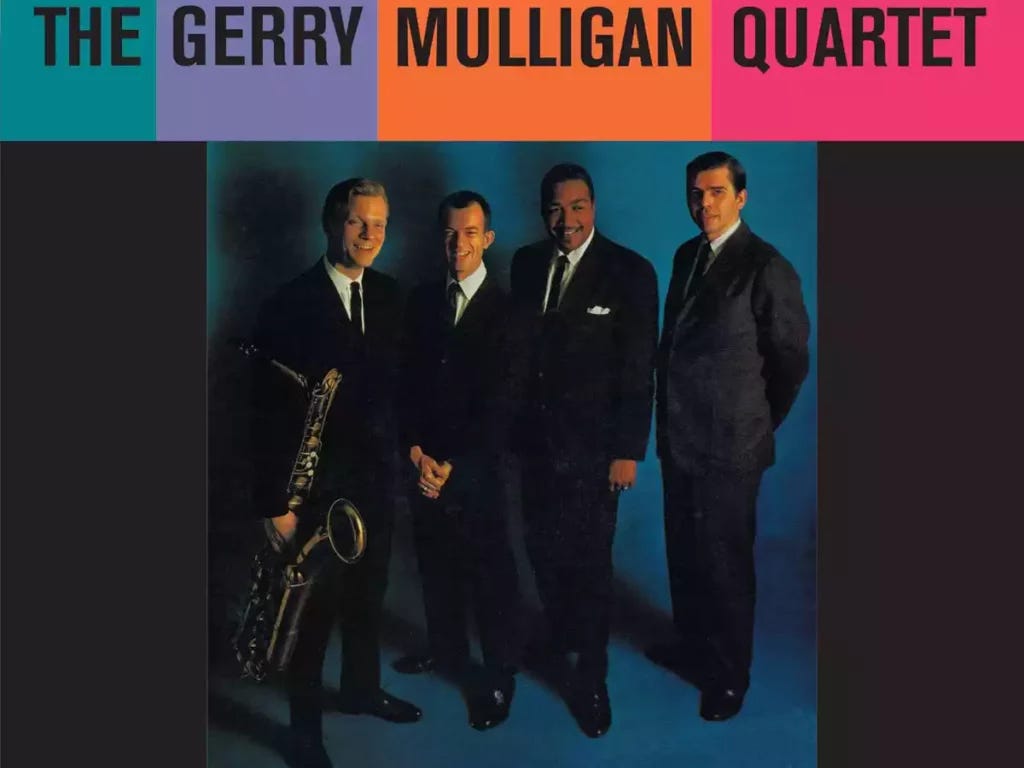
Though brief-lived, the Gerry Mulligan Quartet created an enduring legacy as one of the most influential jazz quartets through their innovative pianoless format. Mulligan’s light, fluid baritone saxophone playing defied the conventional approach to his instrument, while Chet Baker’s trumpet provided lyrical counterpoint that would help define the sound of West Coast jazz. Bob Whitlock’s bass work maintained the harmonic foundation that became even more crucial in the absence of a piano, while Chico Hamilton’s subtle rhythmic support demonstrated how drums could complement rather than dominate the group’s intimate sound.
Revolutionary Minimalism
The quartet’s decision to eliminate the piano from their ensemble proved revolutionary, creating new possibilities for linear improvisation and counterpoint between the horn players. Without piano chords filling the middle register, the music gained a remarkable clarity and spaciousness. This reduction in texture actually expanded their musical possibilities, allowing for greater rhythmic flexibility and enhanced collective improvisation. Their approach demonstrated that removing an element traditionally considered essential could lead to new forms of musical expression.
Their self-titled debut recording in 1952 established not just a new format but a new way of thinking about jazz arrangement and improvisation. The album’s intricate counterpoint between Mulligan and Baker showed how two horn players could weave independent lines while maintaining both harmonic clarity and rhythmic drive. Their cool jazz approach, characterized by subtle dynamics and thoughtful interaction, influenced generations of musicians to reconsider the role of each instrument in jazz ensemble playing.
The Charles Lloyd Quartet (1965-1969)
The Charles Lloyd Quartet achieved something remarkable in the history of jazz: they bridged the divide between avant-garde experimentation and popular appeal. Lloyd’s expressive saxophone and flute playing drew from both traditional jazz and Eastern musical influences, while a young Keith Jarrett was already showing the distinctive piano voice that would later make him a jazz legend. The bass chair, held first by Cecil McBee and later by Ron McClure, provided the flexible support needed for the group’s wide-ranging musical explorations. Jack DeJohnette’s innovative drumming approached rhythm with a freedom that nonetheless maintained a strong connection to jazz tradition.
Breaking New Ground
What set the Lloyd quartet apart was their unique ability to attract rock audiences to jazz while maintaining absolute artistic integrity. They proved that experimental jazz could connect with younger listeners without compromising its sophisticated musical values. Their incorporation of world music elements and spiritual themes resonated with the counterculture of the 1960s, while their technical mastery and improvisational depth satisfied the most demanding jazz audiences.
Crossover Success and Artistic Achievement
Their 1966 recording “Forest Flower” became that rare thing: a genuine crossover hit that sacrificed none of its artistic ambition. The album demonstrated how extended improvisations could remain accessible without losing their exploratory edge. Lloyd’s compositions provided frameworks that allowed each member of the quartet to stretch out while maintaining a connection with the audience. The title track in particular, with its memorable melody and building intensity, showed how avant-garde jazz techniques could be incorporated into a more approachable format without diluting their power.
Legacy and Contemporary Influence
The enduring impact of the most influential jazz quartets extends far beyond their own recordings. Each group contributed unique innovations that have become fundamental to the language of jazz, creating a rich legacy that continues to inspire contemporary musicians.
Technical and Conceptual Innovations
The revolutionary approaches these quartets pioneered have become part of jazz’s fundamental vocabulary. Brubeck’s experiments with time signatures opened new rhythmic possibilities that musicians continue to explore today. Peterson’s model of virtuosic ensemble playing raised the bar for technical excellence in jazz, while demonstrating how precision and swing could coexist. The Coltrane quartet’s sheets of sound and spiritual approach showed how jazz could express the deepest human experiences, and their modal innovations created new harmonic possibilities that musicians are still exploring.
Cultural Transformation
These quartets didn’t just change how jazz was played – they transformed how it was perceived and presented. The Modern Jazz Quartet’s integration of classical elements and formal presentation helped elevate jazz’s cultural status, breaking down barriers between musical genres. The Mulligan quartet proved that innovation could come through reduction as well as addition, influencing how future musicians thought about arrangement and orchestration. Lloyd’s group demonstrated how jazz could connect with rock audiences while maintaining its artistic integrity, creating a model for future cross-genre exploration.
Contemporary Relevance
Today’s jazz quartets continue to build upon these foundations while finding their own paths forward. The emphasis on group interaction, the balance between composition and improvisation, and the integration of diverse musical influences – all these fundamental aspects of contemporary jazz can be traced back to the innovations of these pioneering groups. Their recordings remain vital learning tools for students and continued sources of inspiration for established musicians.
The quartet format itself, as developed by these influential groups, has proven to be one of jazz’s most durable and fertile settings for musical exploration. It provides enough voices for complex harmony and counterpoint while maintaining the intimacy and flexibility that allow for deep musical interaction. The achievements of these historic quartets continue to demonstrate the format’s potential for innovation, while inspiring new generations to find their own approaches to this perfect balance of musical forces.